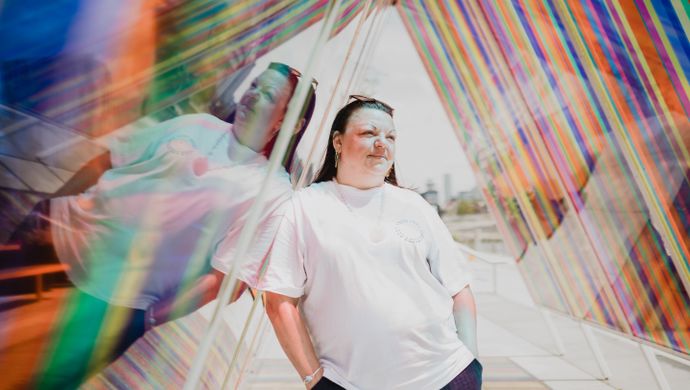


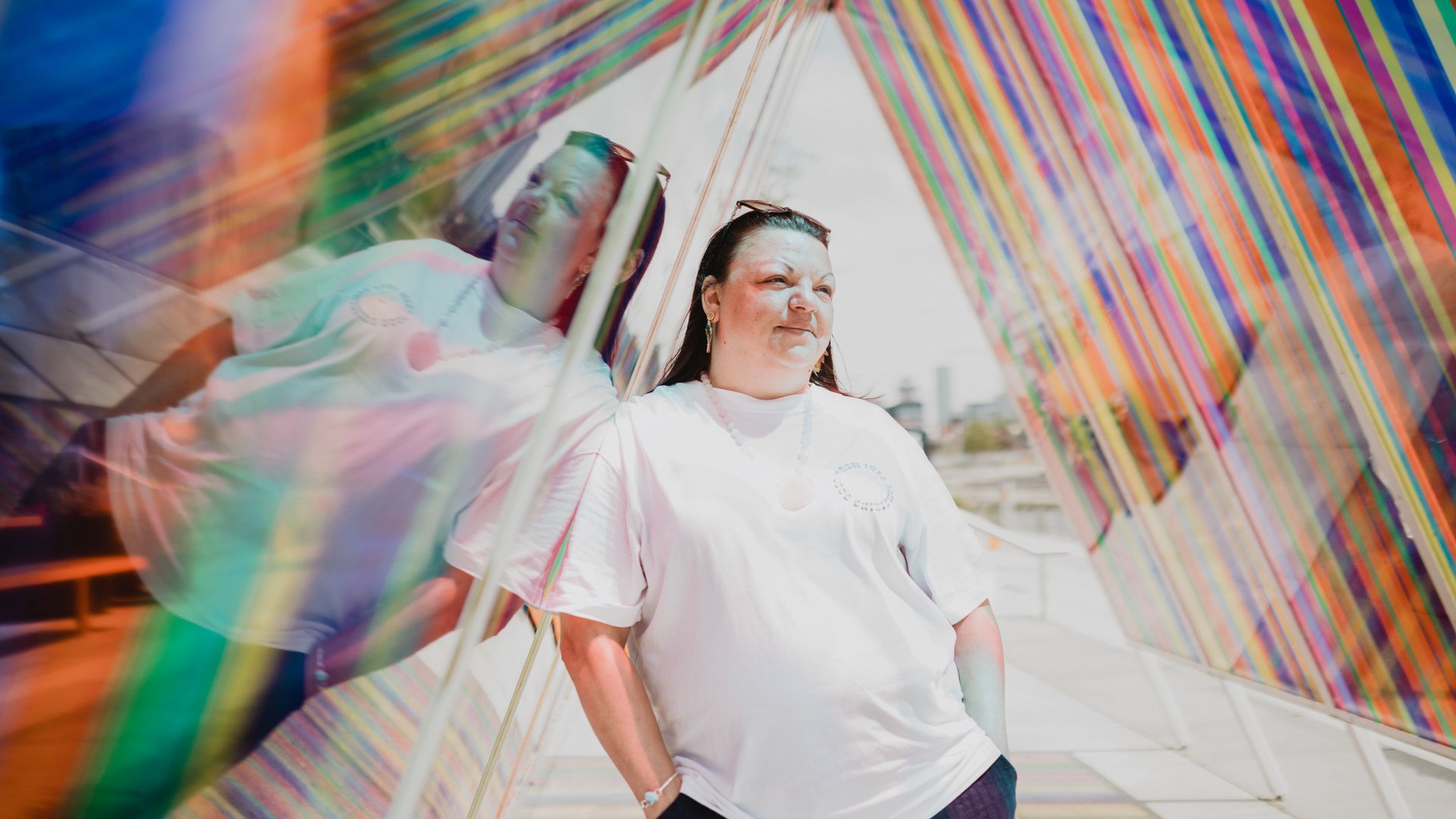
Sarah
Community Connector
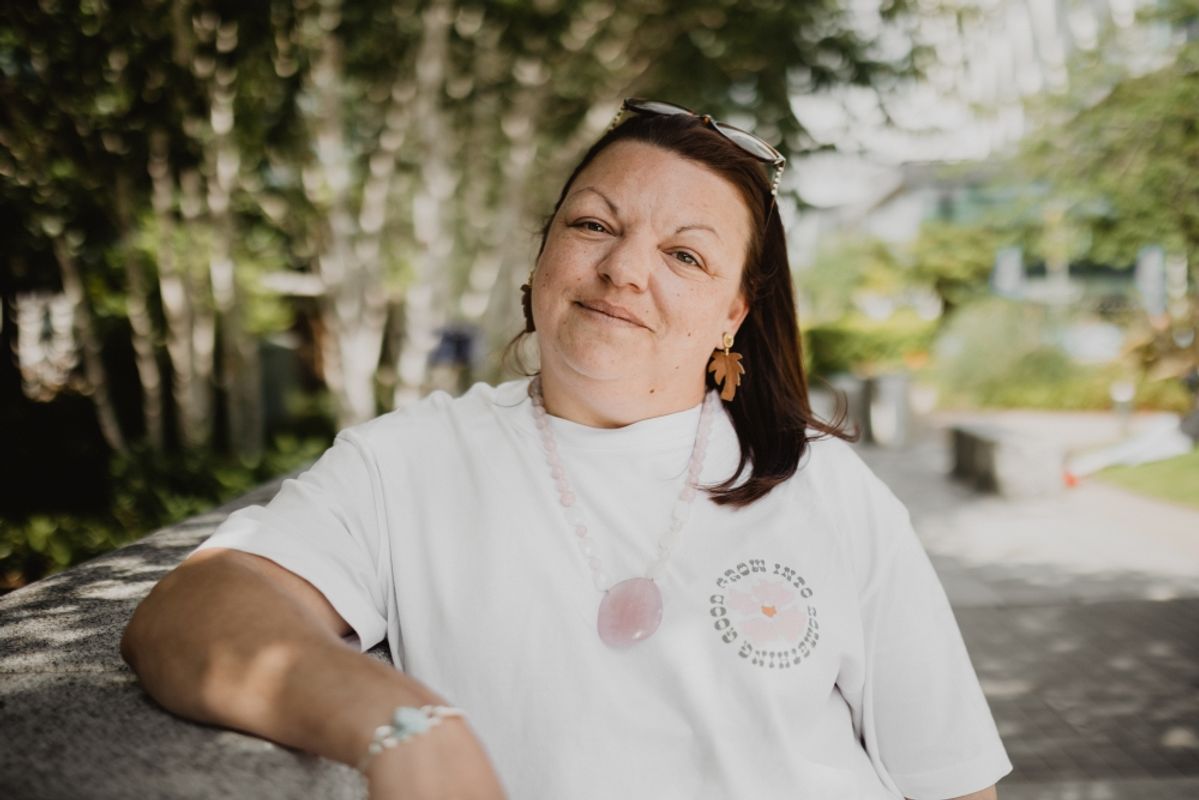
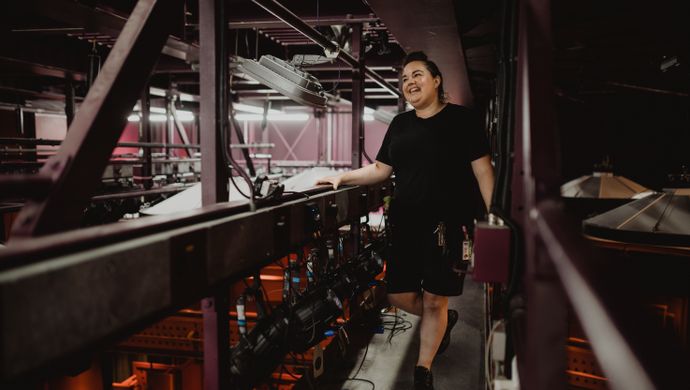
I run a social enterprise called Community Pride, based around the teachings and the values of a Brazilian educationalist called Paulo Freire. It’s about everybody having something valuable to learn from each other and to teach each other. I do a lot of work with local people on the issues that affect them, what they want to do about it, and then helping them to take action together to create change. Part of that work is an event that we run called Mad Pride, for local people experiencing mental health issues, wanting to celebrate who they were with their mental health and not always be seen as a burden.
Lowry used to take out a tent called Big Top, a pop-up theatre that comes into the community, and local people can use the space to put on performances or to have workshops. Someone said to them, oh, there's a lady that does things here, get in touch with her. So they asked me to help.
So, I worked with Lowry to support that community activity. Then Jen invited me to come in as a community collaborator and to work with other local people like myself, who are connected and can help Lowry to bring in audiences that wouldn't normally think to come along.
Although we do Mad Pride and we talk about arts for wellbeing, I'd never thought of myself in that way. The first time I went to the Lowry was to watch A Taste of Honey by Sheila Delaney, the Salford writer. I really enjoyed it, but it wasn't enough to make me think, oh, I'll go and look what's on at the Lowry. It was never a thought.
Now I’m working at the Lowry and running the groups that I run, the Show Selectors and the Community Creators, that gives people some autonomy and sense of ownership of the Lowry, of being a part of the Lowry, and helping to make decisions at the Lowry.
People say it's changed their life, that it's a place of sanctuary, a place of safety. Just recently, a lady in the Community Creators group, she said, 'Yeah, okay, it's nice. We come and we have a coffee and we get a sandwich, and everybody’s kind. But it's not about that. It's about being a human being and not being seen as a worthless, useless, homeless person. It's about being valued and being included and feeling good about yourself.’ For me, that’s exactly what it's about.
In the past, typically the engagements focused around young people but there's a lot of adults as well that really benefit from it. We started with Show Selectors, working with a group of local people who maybe don't attend the theatre or face barriers to accessing theatre, who might have some anxieties around it. We invited them to work with us to put on community-based performances for audiences that also face barriers and are marginalised.
The group chooses the audience to target. They choose the show. They are given control of their own budget to create whatever they want to put on for Salford residents. We meet twice a month in an evening, because some people work through the day, and we have food together, do a check in, and we talk about shows that we've seen.
We go and watch lots of shows in different spaces. A lot of the people haven't accessed theatre before because of financial barriers, so we provide free tickets, travel expenses and support. Sometimes I might meet people where they feel comfortable and then take them to a new space. We do things like that to make it easier for people.
We take them to see theatre in spaces where you wouldn't expect it to be; lots of different styles of theatre, so they can have a really deep understanding of what's out there for when they choose their own show. We’ve watched risqué burlesque, we've watched shows about religion, for example one that looked at a man's experience of being part of a mosque, and a lot of the language that is used. Afterwards, one of the ladies I was taking home, we stopped at a shop, and the man in the shop was Muslim. She was talking to him using language that we just learned, and she was really proud to show respect to his culture. And he was just blown away. So I found that really powerful.
We've watched lots of different things. We've watched some obscure things and then some really mainstream. Reincarnation, which was an African dance piece. Ocean at the End of the Lane by the National Theatre just blows you away. One of the group said, ‘You know, I feel like a five-year-old kid. I'm sat here and I'm weeping and I've been laughing and I'm in awe.’ They've been quite surprised by how it's impacted them emotionally.
The most recent Show Selectors group delivered performances across daycare centres and nursing homes for patients living with dementia. They chose a 1950s musical called Rock Around the Clock. It's very interactive. The group created bunting to give to all of the venues to decorate, and created an activity pack that's got song sheets so we can do a sing-a-long, all different ideas to make it a bit more fun. Then with the budget that's left, we're also doing a bit of a support to the dementia hub, taking some artists and doing some workshops. They’re really excited about it.
The group really wanted to think out of the box, asking who really doesn't get to get here, and why? Because if you're living in a care home, often they don't have enough staff. Even if you could afford to take everybody, they don't have the staff to do it. They don't have transport. Venues aren't always well equipped. So that was their target audience.
We're also delivering a performance at Oakwood High School for children with special educational needs, a show called Bamboozle, which is a light sensory show, specifically for people with autism. It’s very small audiences, six at a time. In the past we did Nana Funk, which was a fun aerobics workout show in a Walkden shopping centre, which was amazing.
We've had Salford’s very first pop-up hip hop musical in Victoria Park. It was called There Should Be Unicorns. And the show was that brilliant that the whole audience just sat through the pouring rain. All of a sudden the heavens opened. Nobody was prepared, but not a single person moved and I think that showed how much people were enjoying it.
A lot of families struggle to bring their children to Lowry to watch a show. Obviously, we've got a lot of things you can do for free in the galleries. We have our open day every year where we host loads of things for young people, and we do HAF, the holidays and food programmes.
We do a lot, but there's still families that feel that they couldn't come here. So going out to them, putting on a show for free, it helps us to start making that relationship with them. Then they come to Lowry and they see me, or they see the other people that they've met in the park, and they feel welcomed and they don't feel as anxious about it. Then over time, those people are bringing the other people from the community. They're inviting all the kids off the estate and coming up on a coach or bringing them to a community night to watch a show with me, which is how I first came. But I wasn’t as well behaved as my groups are.
Off the success of Show Selectors, we wanted to help bring the community into the galleries and give them some ownership of the spaces there. So working with local people again and going to explore lots of different types of art, different museums and galleries. Looking at art in all of its forms, and then also taking part in workshops with artists. So we've done clay sculpting, zine-making, mosaics, tried our hand at lots of different things. Then the group is given a budget to create an exhibition that's interesting to local people.
This year’s exhibition is called Our Salford, Our Lowry, and it’s about the group and the difference it's made. One of the members has written a poem called You Can Count On Me, and it's about feeling alone and feeling sad, but not having to fall into it, because they've got this great group of friends where they can try new things and they can escape there. It's really powerful.
I’m learning as much as they're learning, because this isn't my area either. So I don't know everything just like they don't know everything, and we learn it together and we have a laugh. They see themselves in me a little bit and think, Well, yeah, if Sarah can do this, we've got to try as well. I think we just really have a lot of fun together.
It's hard sometimes to move a group on because people want to stay. So we say, if you've been in Community Creators, why don't you come to Show Selectors next, or why don't you get involved as a community ambassador? Jen and I are always trying to think of new ways to keep people engaged with us, because it's just the starting point for them.
When people see the ownership of something, they protect it and take responsibility for it. People will talk negatively about Salford people and the negative things they can do, but that can be flipped. It's how you engage with people that determines the type of person you're going to meet. I think when they see that you respect them and you really genuinely value what they're going to say and it's not just tick-box exercise for your own benefit, it makes a difference.