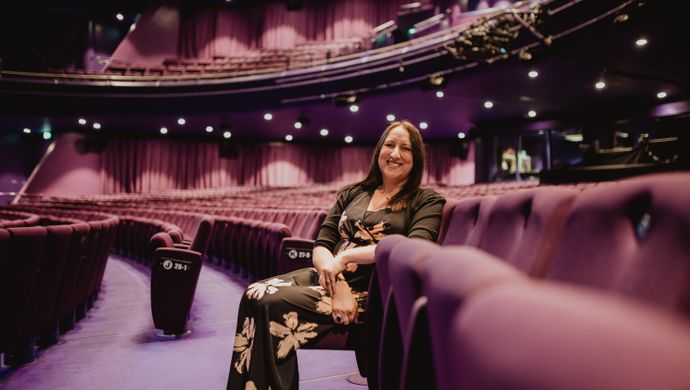


Gemma
Technician
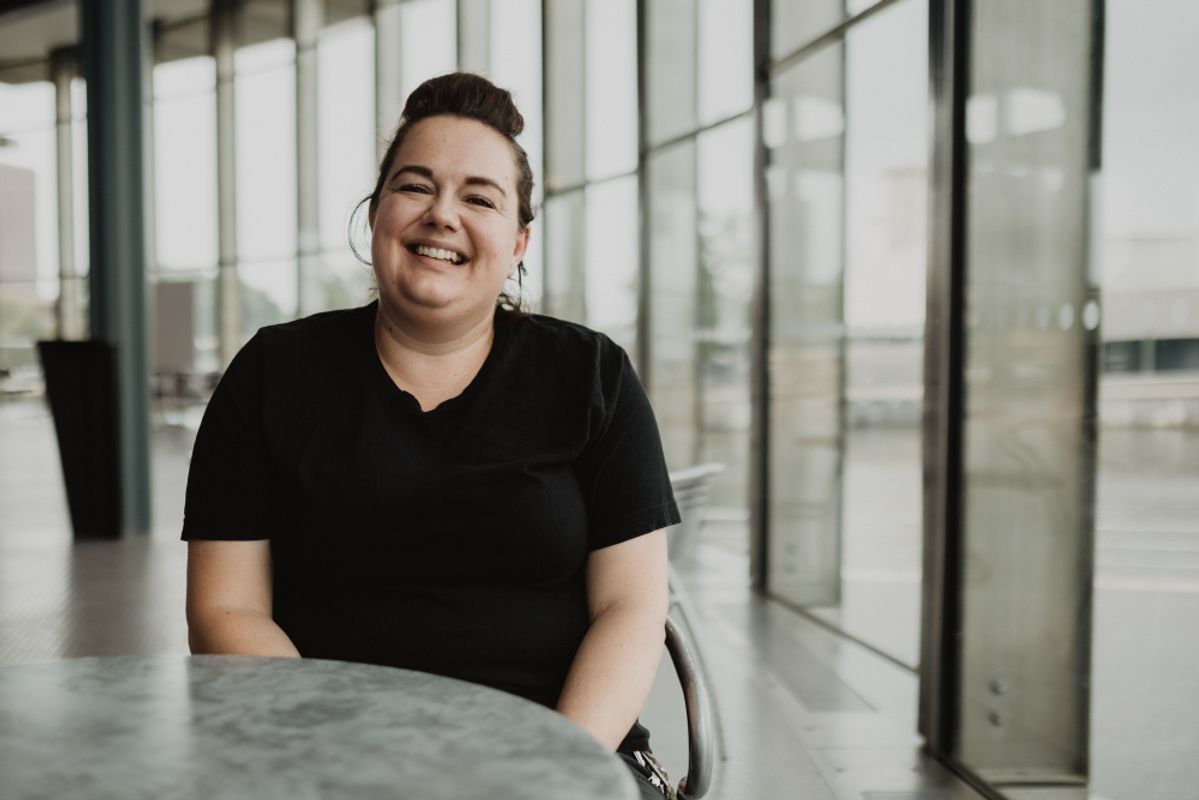
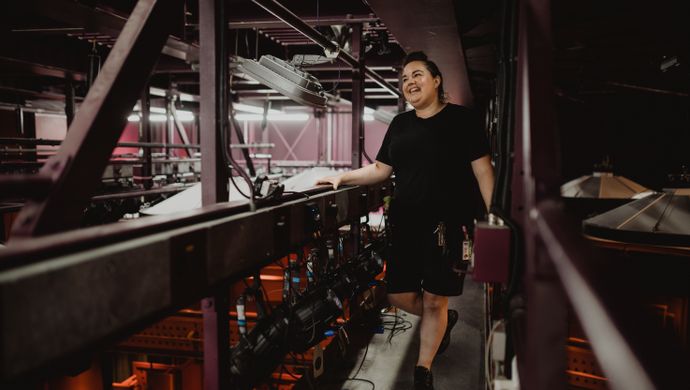
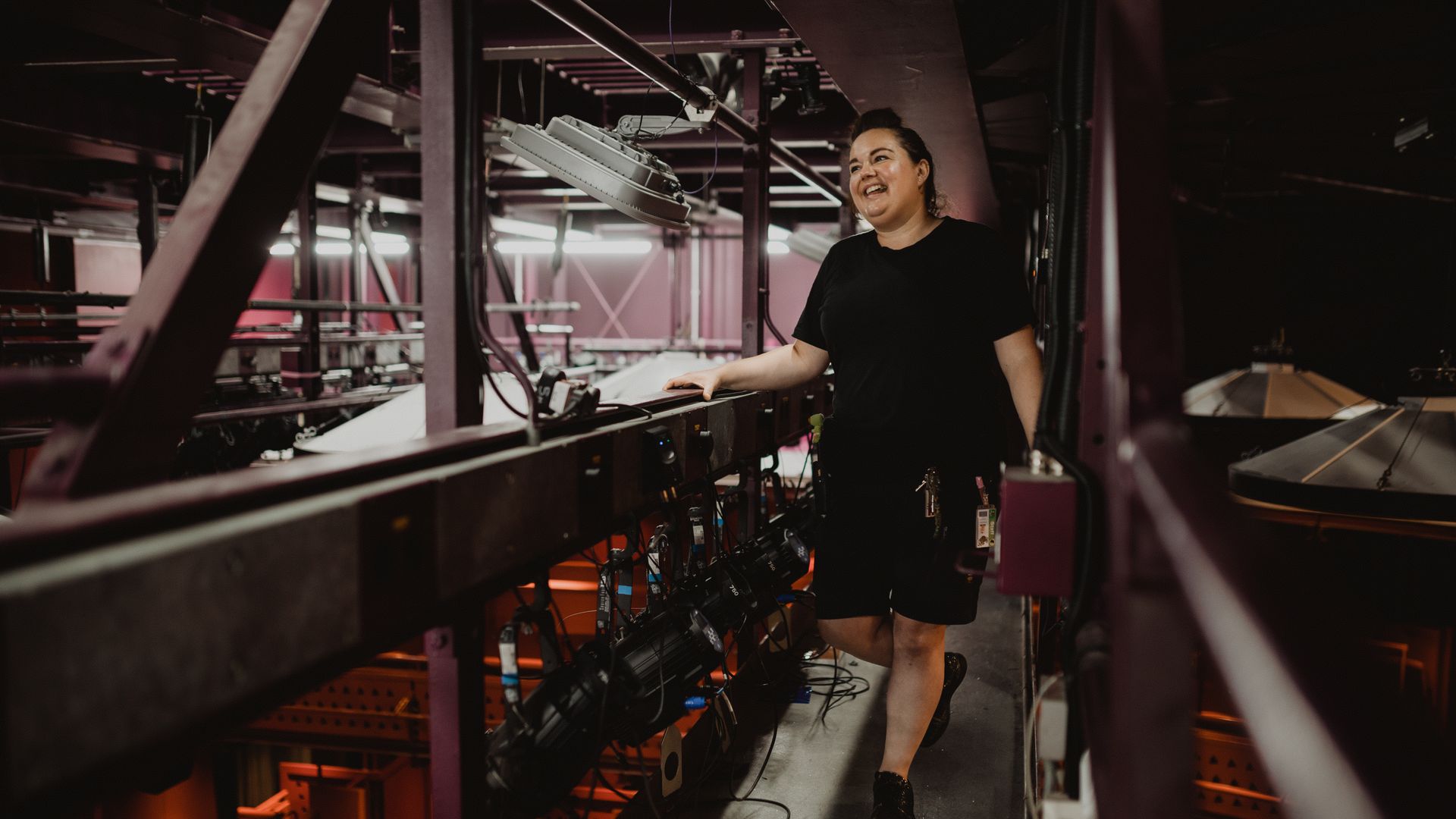
I don't think there is such a thing as a typical day backstage. For show-running day you come in and do your rig check. You make sure that everything is working exactly as it should be, because somebody spent a long time designing, so you need to make sure that it's working exactly as it should. You can have a whole cue stack built to do that, and then you're on standby for anything going wrong until show time.
We follow the production design. We’re not a producing house, so we don't design or do anything like that. We follow the instructions, we build the shows and then sometimes we'll be left to operate it and look after it on a day-to-day basis.
Then when the show starts you're on comms and headset. You're left to operate the lighting desk or anything else show-based. You can be flying. You can be getting people to stage on time. Show running is quite simple, until something goes wrong. You’re there to pick up any pieces that fall over.
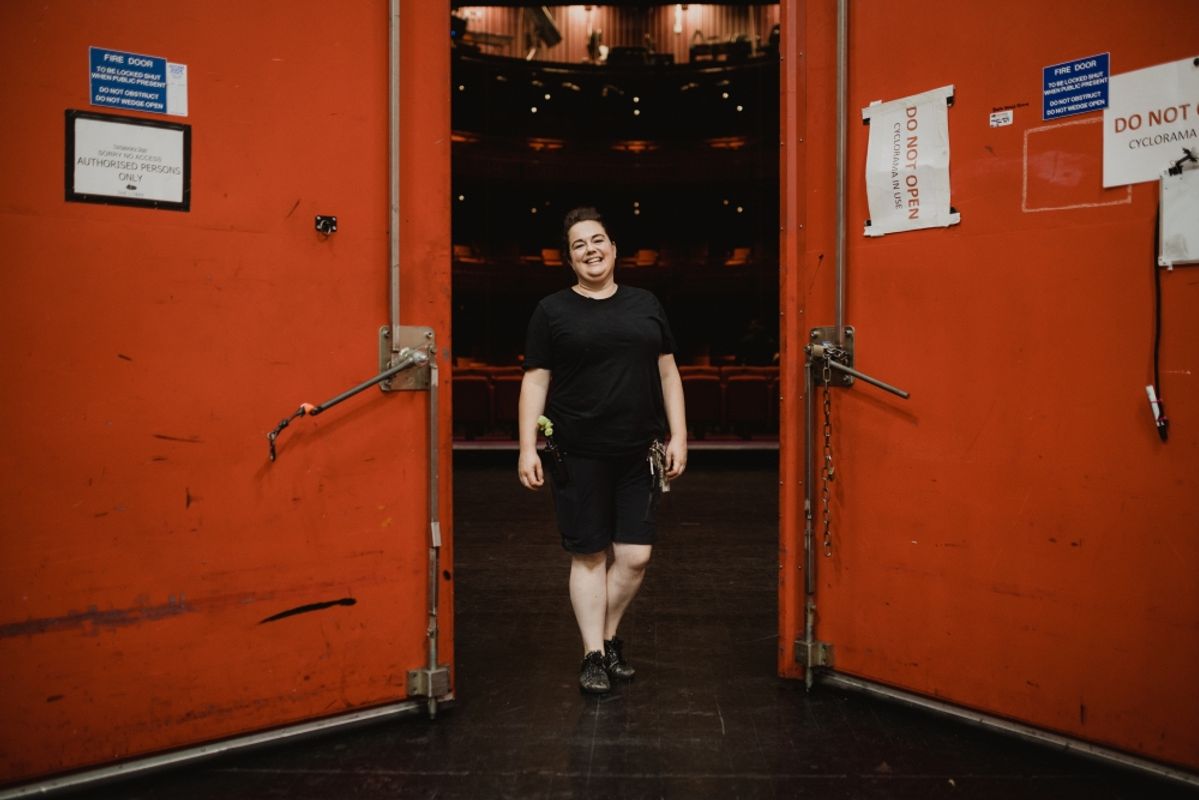
There's 19 of us backstage, and we're all classed as multi-skilled technicians. We all have our area of specialty, but we try and work across the board so keep ourselves fresh in everything that we do.
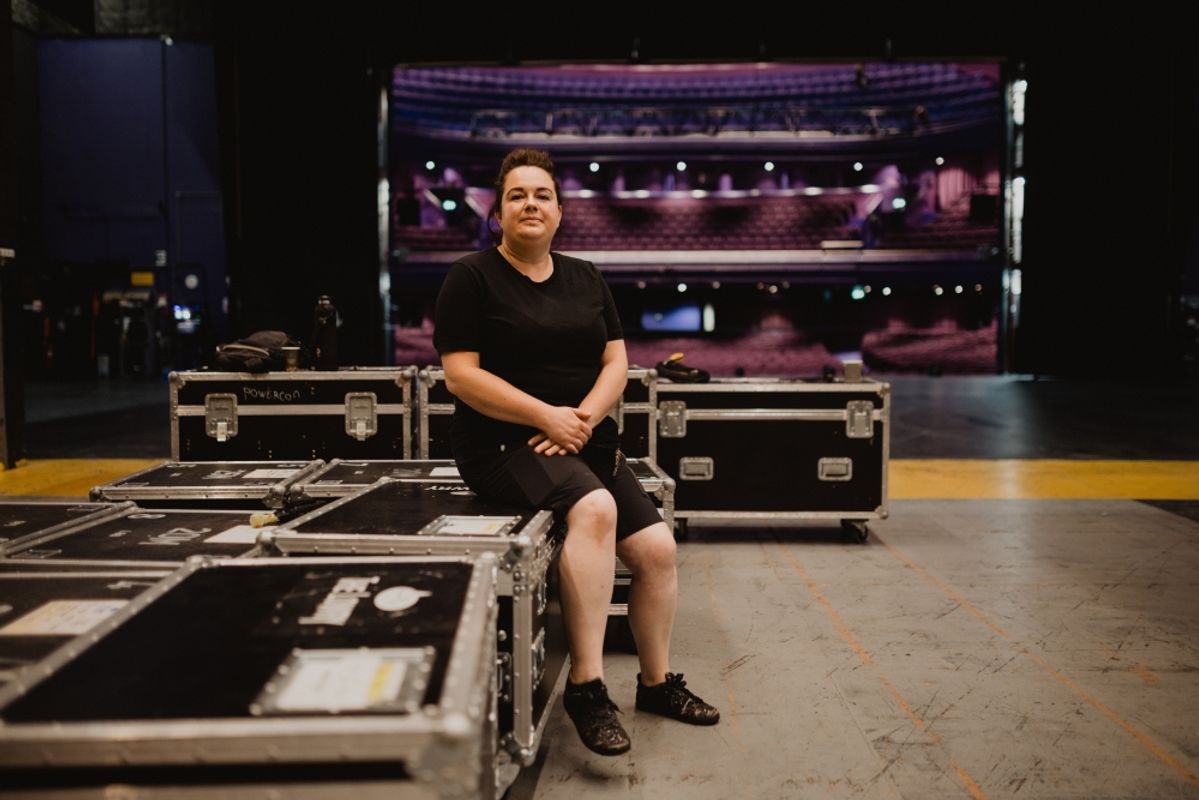
On a fit-up day, it really, really varies. Once a show arrives at Back Door, we'll unload whatever we've got. Some shows, comedians or smaller dance shows, will arrive in a car; then bigger musicals will arrive with several wagons full of stuff. So we empty all of those, we move them into each venue. We have three spaces where they can come in, and then the venues branch out into the one or the other, or we go upstairs to the Studio.
We can do a full week of 9am-10pm, getting big shows ready. Or if you've got a comedian, they'll rock up, and you'll do a sound check and make sure they're happy with the lighting and how it looks and how it sounds.
It's really interesting how the people who you think are going to be quite fussy and quite particular are generally quite chilled. And then people who you just haven't really considered, will say, No, I want that 5% more, 5% less. Seeing those personas in different people is quite interesting.
People make a massive difference to your day. We work with different people every single day, with every single show, you've got different tour managers and people like that coming through. Then people come back as well. Especially comedians, they often start in the Studio, and you see them move through the venues and that's really, really lovely to see as people's careers take off.
I remember going to concerts with my mum when I was a kid and thinking, that's what I want to do. So I went to my careers meeting, and I think I'm the only person to ever have found this useful, because the careers guy said, oh, you don't have to do your A-levels. You can go to Oldham and do technical theatre straight away.
I think my parents were horrified, absolutely horrified, that I wasn't going to go and do my A-levels. I was the only girl on the course, and then as I was leaving, Manchester International Festival were doing Monkey: Journey to the West. They needed a followspot operator, so I went and worked on that, which is still the biggest show I've ever worked on. It was huge. Monstrous! But beautiful.
Then after that show, I stayed on at The Palace just working on a show-to-show basis. As a female, I got shoved on dressing a lot because, Oh you're a girl so you can do wardrobe, but it did build my confidence.
It's a male-dominated environment. There's no way around that, and it does take a little bit of getting used to it. I think there's different ways of navigating it, and everybody's got their own way. For me, I'm very bossy, that's the way that I deal with it and take ownership of it. I think you have to be confident, but also acknowledging when you're wrong.
The smaller companies coming through, they are much more diverse in every way possible. And I think that's really good. People put a lot of effort into having diversity on stage and making sure people are represented. But if you take that off stage and look backstage it isn’t always the case.
Then I got a full-time job at The Palace as the deputy LX. I was there for about 15 years overall. I came here to the Lowry about three years ago and did a couple of casual shifts, and the job got advertised, and I thought, is it time for a change?
I think I made the right choice, because we get involved so much in the smaller shows. That’s where I learned so much about programming and what looks better and what doesn't, and working with designers, rather than just rigging the same lights in the same spot each week.
We do such a variety, you go from Britain’s Got Talent to big musicals to smaller community shows. I originally thought, I don't know how I feel about doing the community shows and the artier stuff. But actually, I prefer the smaller things that we do because you can get more involved.
I did a show once that was for people who were recovering addicts; they put a lot of effort into this show, and it was just about getting them on stage, and they committed to something, and it was really good to see. They put so much effort into doing it and it was so rewarding.
Once you're sat in an auditorium, you're in a completely different world. I’ve got a headset on listening to people talking about what's going on all the time. I'm sat at my desk ready to go, or in the wing waiting for people to move.
As lighting operator you watch the shows up to eight times a week, especially if it's a busy show and you need to be watching everything that's happening. So for 2:22 A Ghost Story, it was really interesting, because I had no idea about the plot. So I watched it, and then I was able to watch it again and see all the clues that were planted there all along, lots of them done with the lighting.
Or if you are working on a show for quite a while you might see an understudy come on and watch the differences that they bring to it, they can just change a role slightly, which can then completely alter the show.
Lighting for a theatre show is all about really subtle colour changes and mood. Quite often, you won't notice the changes at all and that is the skill. People are surprised at how big lighting rigs are, because you've got to have them in so many different places and so many lights involved. And if you've got lights in one scene, but in the next scene you want them in a different colour, your cue stack will be different to hide those changes.
Lighting teams are always so much bigger than people think. For a big musical, you'll have a team of about 10 to 12 people putting it in, and then there'll be three or four people left on the show just looking after it on a day-to-day running basis. It seems a lot when people may not even notice the lighting, but if it wasn't there, then it would very different.
Dance is a real speciality. Or magic, that needs to be very precise because if you shine a light in the wrong place you're going to reveal everything. That can be really quite tense.
So it's little tricky things that you don't even notice when you're watching it. Say, you've got a group of people, but you'll make that one slightly brighter so that they stand out a bit more. It's not something you would ever know about. But a lot of time and consideration goes into it.