

Michelle
Volunteer
My first day at the Lowry was on a show called Beyond the Barricade, which is a concert of show tunes, Les Mis and things like that. I might not have had a clear memory of it but the fire alarm went off when I was on duty. It was a new system, and it went off quite frequently. Because it went off into the theatre straight away, we had to wait for everything to reset and everything to be reviewed, and then we just took people back in. That doesn't happen anymore, thank goodness. Now there are set protocols, and we know to look out for the light in the actual theatre itself.
I came for my volunteer interview in April 2001, so within the first year of opening. A couple of friends of mine had started volunteering earlier and when Lowry had a Christmas party they invited me along, and I thought, this is amazing. I've always loved theatre and getting to speak to lots of people, and then with seeing all the shows you possibly can see, I just thought, this is absolutely excellent. I had quite a pressured job and very young kids at the time, who are now grown men, and now I’ve got two grandkids. That’s all happened while I've been here. So the Lowry has been an anchor for me.
After about three years in, when I needed an op and treatment. I still came when I could, because it was something to anchor my life on, a constant. Although it might seem demanding, it's so not. It was a way of not thinking about it. I had the patrons to talk to and it was a thread of continuity. I've not needed to take a break because they don't pressure you for your shifts. I think that that flexibility and that kindness of the front of house staff, and that culture of the staff and of the Lowry has helped me in a way that perhaps volunteering in another sphere might not have accommodated.
So, as a volunteer, you arrive between an hour and a half and an hour before your show begins, depending on what you're doing. If you're going to be selling programmes, for example, or doing meet and greet, you get a briefing about the show, and you get told if there's any big parties coming in. Then you then go and stand in your position. If you're on meet and greet, you usually are situated by the front entrance. And if you're on sales, you're generally either at a stand or you have your brochures and you wanderer and mingle in the crowd.
Then at the end, we wait for the lights to start to go up, we open the doors, and as people leave, we say, if we can, and we usually do, Hope you enjoyed the show. But it depends on the show. I don't always say that, because sometimes the show is a difficult show, so in that case I tend to say, have a safe journey. We check for lost property, anything that's amiss. And then we shut the doors and lock up. We usually have a bum bag, and we take that down and hand it in.
One of the shows that has stuck with me has been Slava’s Snow Show. I took my kids to see it at least 15 years ago, and they still talk about it now. Anytime it's in town or even in another country, they pick it up when and say, we want to go! I'm like, Well, I don't think I can afford to take you to Copenhagen, but they really loved it, and it was very magical.
Another was a production that involved Spanish horses on stage in the Lyric. I think of that now, and I am having palpitations, because they came galloping down the stage and then just stopped - you could smell the horse smell. Surely that would never get past health and safety now having horses thundering down the stage with with an audience 15 feet away.
Another was Innit: The Musical, which was a play produced by young kids in Salford, and it was fantastic. It was about about growing up in Salford, their aspirations, the pressures of living in Salford, work and schooling, and low expectations. Just not being given a chance, really. And it was a brilliant play, brilliant musical, lots of different types of music: bit of jazz, bit of reggae, and I just absolutely loved it.
I hate stand-up comedy. It makes me nervous, really anxious. Romesh Raganathan was down for the Studio, which seats approximately 200 patrons. I thought, oh, it's the Studio, at least I can sit down for sure. Then all different people from the Southeast Asian community and Sri Lankan community came up to me and asked me if there was a prayer room and all that. I thought, Oh, wow. What sort of comedian is this then? This is wonderful! But, I'm still going to hate it because I don't like stand-up comedians. Anyway, he comes on and I promise you, I have never laughed so much in my entire life. So he totally stands out as eye-opener, as a revelation and an unexpected joy.
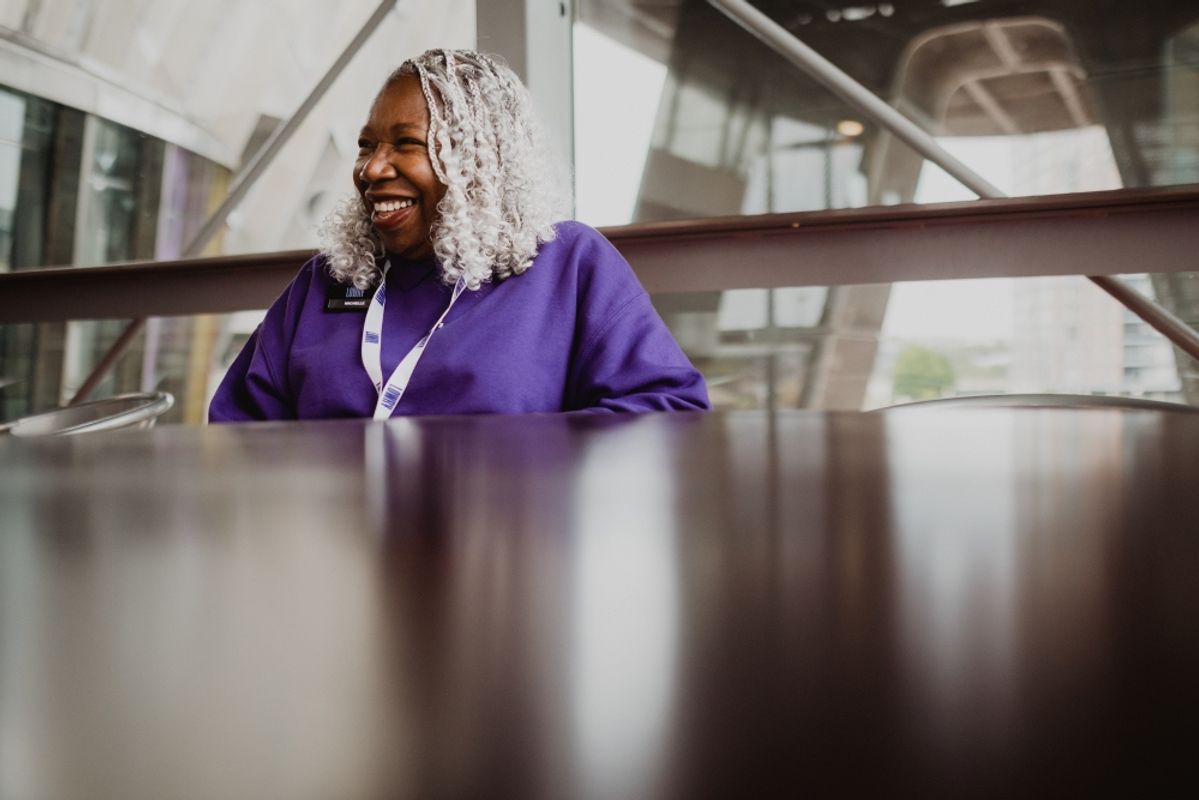
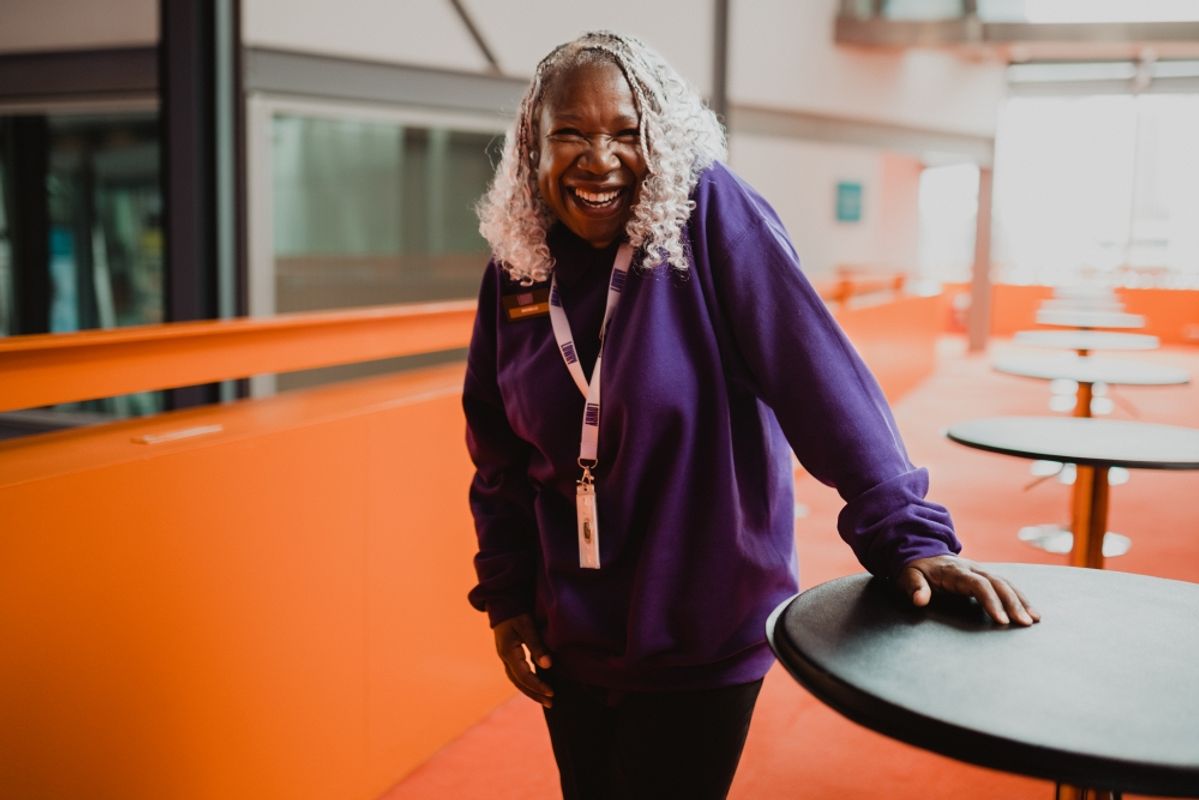
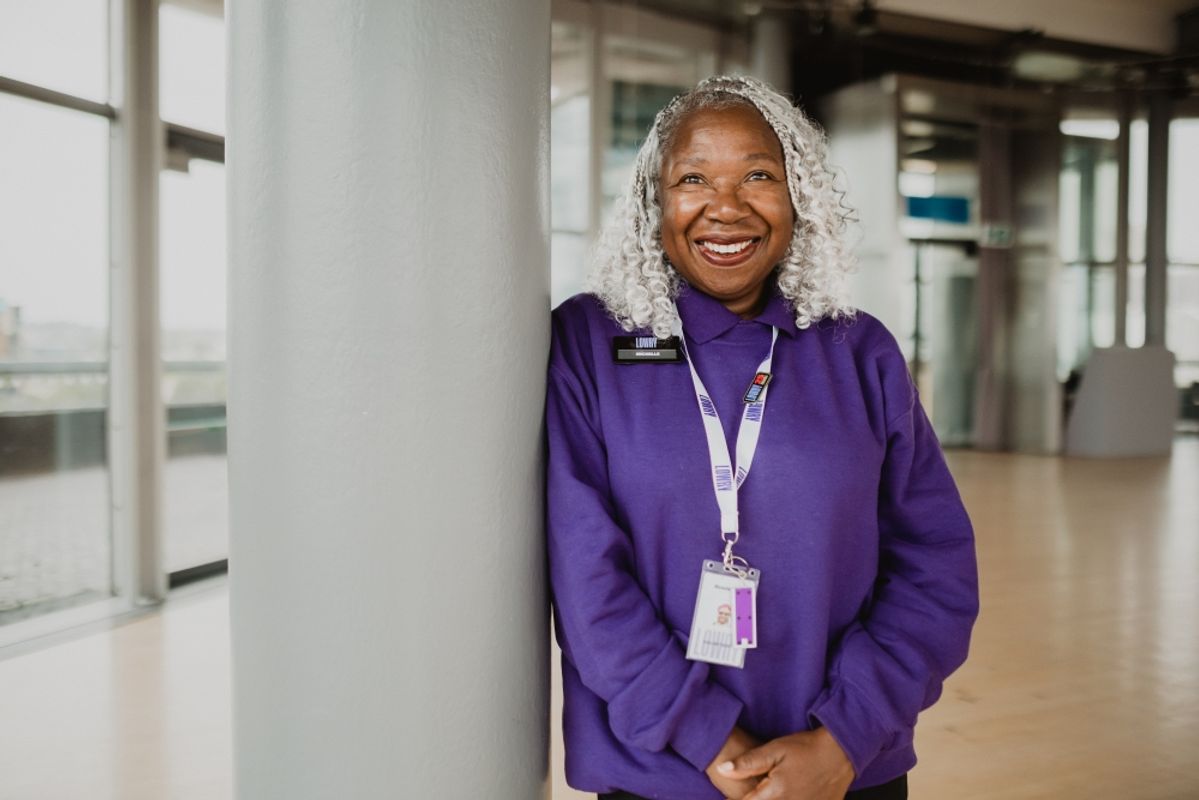
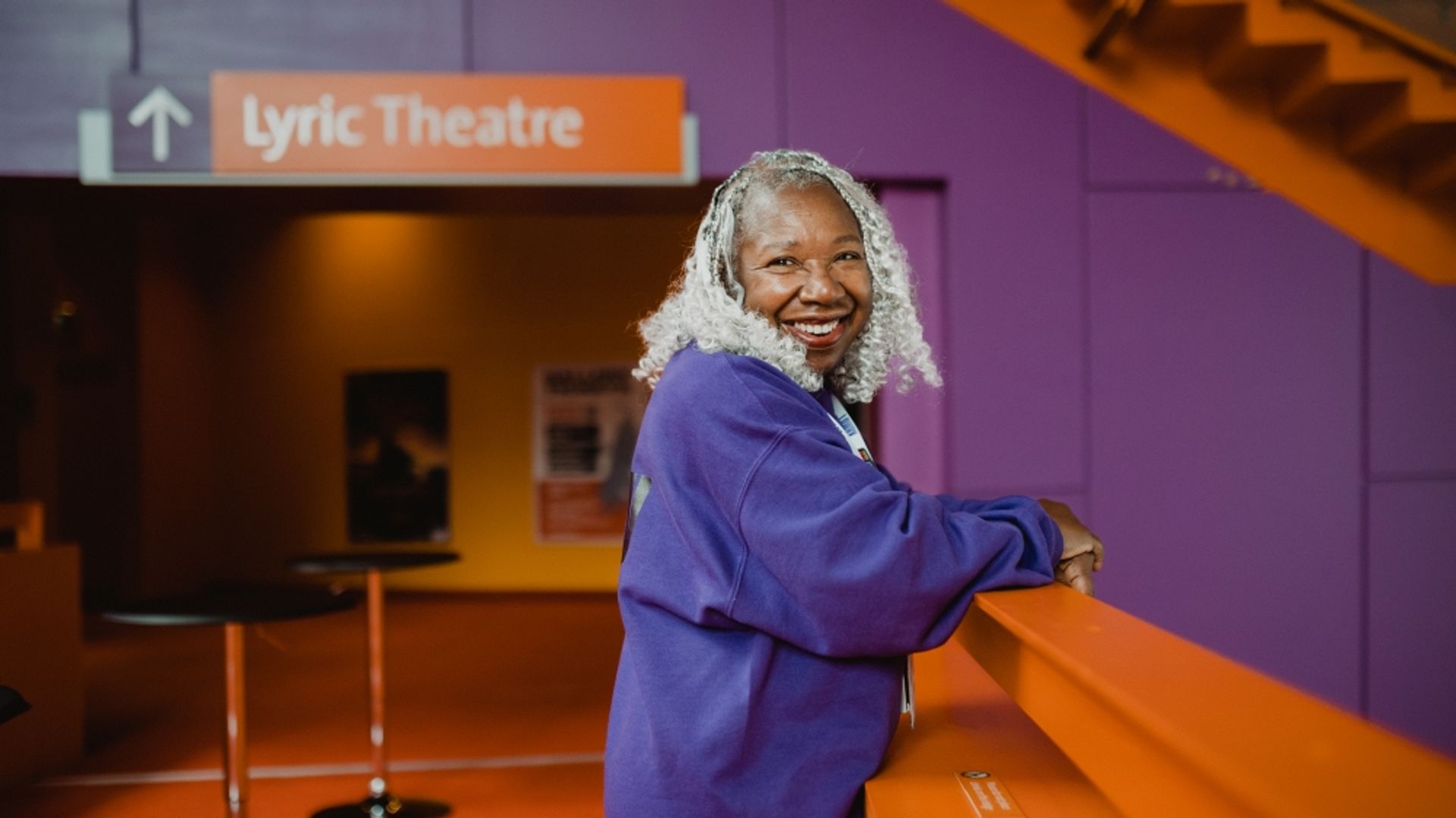
Getting to see shows is great, but for me, if I'm 100% honest, it's the patrons. The patrons give me the most pulls on the heartstrings, the most reason to come. I find that the job I do is quite difficult and I don't always know how to end up leaving someone happy. Whereas that's my whole job when I come here, from the moment I put on this purple, my job is to make whoever I'm speaking to happy and content, even if they start off being really unhappy. So that's the role, and that's the joy.
I wish it wasn't so corny, but that's the truth of it. I've had so many wonderful experiences with patrons. I was on door F/E, which is the door that when you come down from the gods, you see first, the person you see first. It was Swan Lake, I was standing there and then this young woman, came down and she was really stomping down the stairs, and she was looking at me and she's red in the face.
I was bracing myself for her to say something like, it's too high, it's too crowded. She said, ‘Oh, I've just got to hug someone. Since I were a kid, I've wanted to see Swan Lake, and I saw it was on, and I've saved ten pounds to have seats up there and it's the best thing I've ever seen in my life. I just need a hug’, I said, 'I don’t mind hugging you!’ And then I said, ‘You wait till the second part. I won't tell you anything, because I don't want to spoil it but the second part it is even more amazing.’ And I can see her face now, and I can feel how I felt when I saw her coming towards me. Swan Lake is a common production, but for that person, it was not a common experience.
She saved that money out of whatever little she had, and that just shows how important less expensive tickets are, and also how important getting children involved when they're young is, because what you want to do to keep theatre alive is enthuse children when they're small, and when they grow up, and they can earn more than just ten pounds, they'll think it's worth paying the full price to help other people get those less expensive tickets.
As for what’s changed, I’d say the shows are far more equality and diversity minded. There are far more things geared towards young people who are not usual theatre-goers, which is important, which is wonderful. I’ve noticed the change in people volunteering. There’s definitely more people, younger people, by far, volunteering now. There was a time when I was the only person of colour, whereas that's definitely changed, even down to bar staff and tech. There's more people with black, brown, pink, purple hair here which is brilliant.