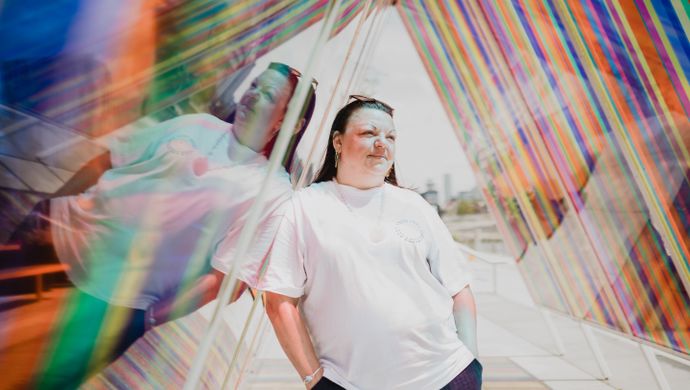


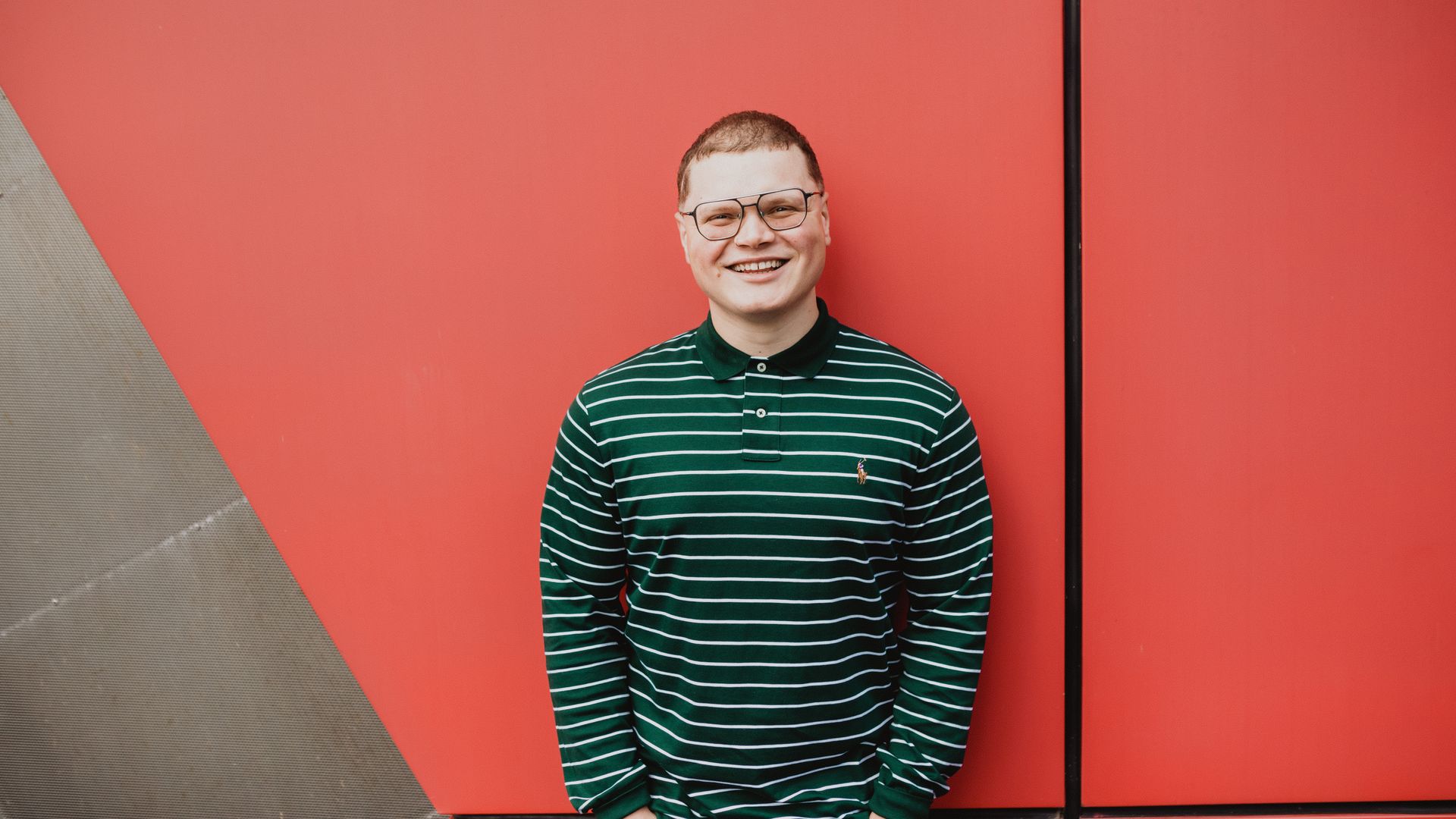
Jaiden
Trustee
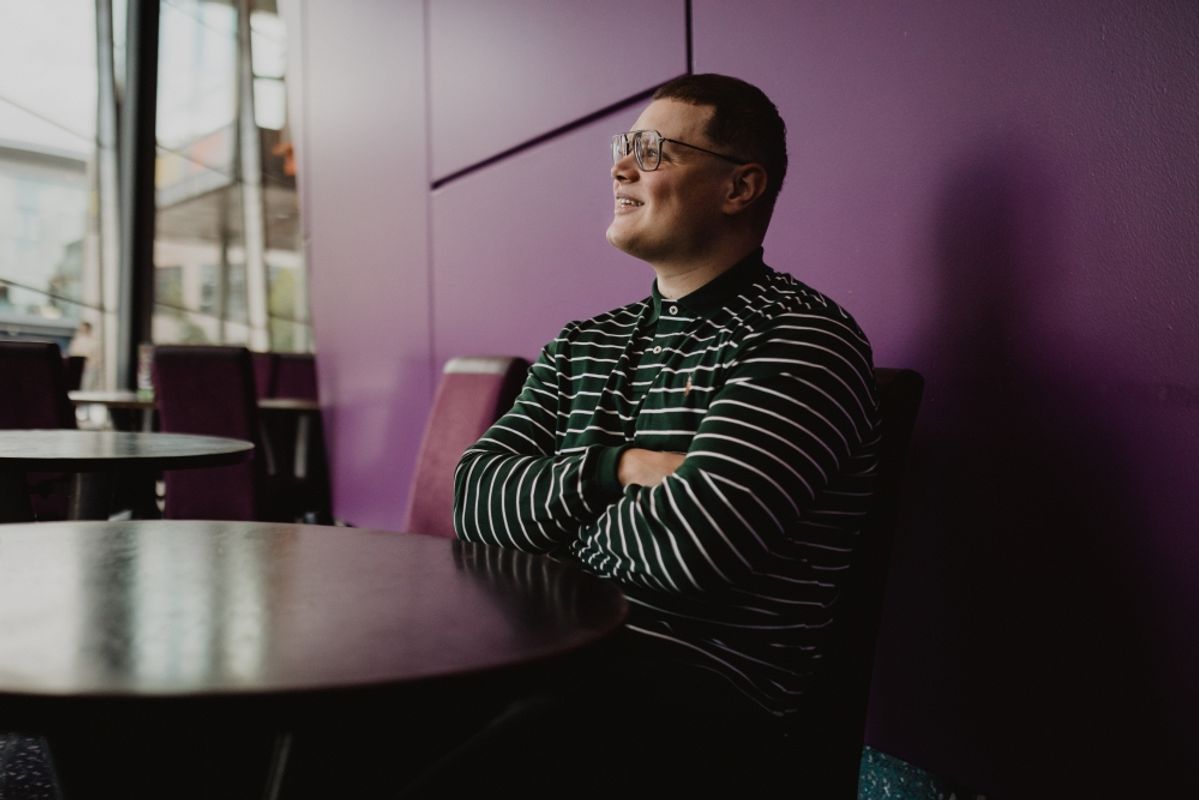
I was at growing up in the care system. In and out of the care system, never entirely in it. Lowry were doing a programme for Looked After young people. My sister joined first, and then she recommended it to me. We came and we met Jenny, sat on one of the tables in the foyer and had a chat about the programme. And that's when I joined. I’d obviously heard of the Lowry, but I hadn't been before. That was the first time I’d actually been inside the building.
Essentially, it was a drama session every Monday. I was never really a drama kid, so when we went into the session I didn’t really think that I'd enjoy it. It was more a space to go other than the chaos of what was going on at home. So we did that, and actually I loved it a lot sooner than I thought I would, because it was a place where you could let go. At the time we were in the care system, there was no other way that you could let all your emotions out.
I think that's why they created a space for Looked After young people, because they knew that we needed a space to breathe for a second, to put a mask on and let other emotions out. That's what they allowed us to do. I think that it was probably the most valuable thing at that point in my life, just as a way or a place that I could channel all of my emotions. They never asked us to show up as something else. And that's what I really valued about it.
We were always creating some sort of new piece of drama, some little mini script or mini show. It wasn't necessarily that we were trying to get on the stage. We were just doing it for the fun of it. We were always doing stuff like that. I just remember running around and dancing and having loads of fun with people.
I gave myself permission to have fun here, because I didn’t have that at home. You could be this really fun character that had nothing going on. Or you could come to the session and be really miserable and channel it into a poem, or channel it into something else. So memory-wise, I do just remember running around and having loads of fun and being with others who also could relate in some way. I think that was important as well.
I loved the Monday so much, I started going on a Wednesday as well, so I was coming two evenings of the week. Wednesday was much more about journalism, getting angry about stuff and writing about it. That was such an incredible skill to learn. You never really think about journalism or consider it, especially if you're from Salford. So when I started those sessions it was permission to think, what am I angry about? Let's learn about it and then write about it. That was incredible. It taught me a whole new set of skills. I started my campaigning journey at that point. And I’ve been campaigning ever since.
I think the journalism programme was the kickoff to get angry about stuff, and talk about it and learn everything about it, or as much as you can about it. I started campaigning about Salford off the back of it. About Salford being painted in a really negative light. When I was growing up, it was the gun and gang capital of the North, and the feeling was that all the young people can only aspire to crime and violence.
I think I took it personally, because you're telling me that all I can become is crime and violence? I think a lot of other young people did take it personally, and then became that. And so there was a role for the media to play and a responsibility to stop portraying it in that light.
So I ran a campaign, which was to walk around Salford and show all the good sides of it, as opposed to what the media were doing, which was showing all of the bad sides. We filmed a campaign going to all the little local spots and talking to the shopkeepers, asking them what's the best thing about Salford? Then we put that out there in collaboration with the Manchester Evening News, and that kind of blew up.
That allowed me to do more campaigns, which have been mainly focused around young people from disadvantaged backgrounds and their education, and allowing young people to have more of a say in education. And then young people politically to have more of a say. So that’s been the root of my activism and campaigning.
We built Rekindle School, which is a supplementary school, the first-ever youth built supplementary school in the UK. I think I was 17 or 18, at the time. It was really nice to just imagine what the school could look like if you place joy in the centre. So that was really beautiful. I did a lot of campaigning through Reclaim, which is another Manchester-based organisation, which is now closed down, unfortunately, but they were really powerful in terms of working-class young people.
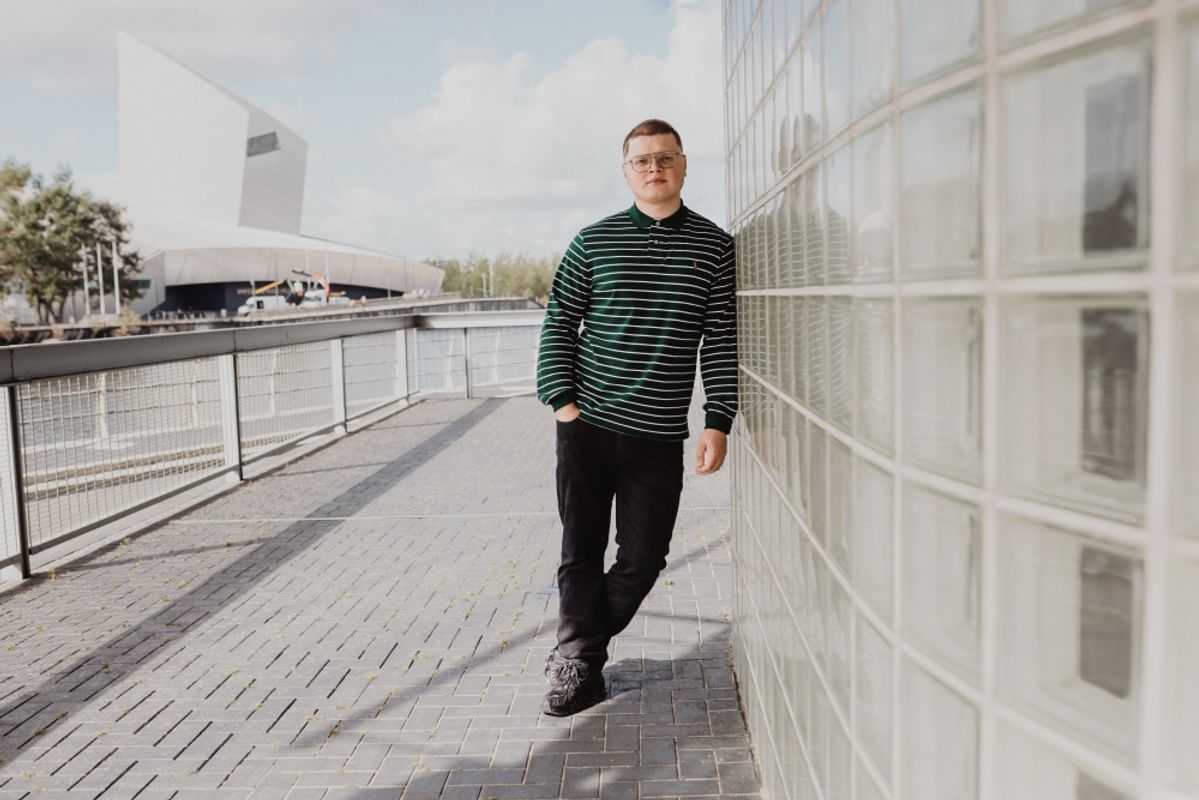
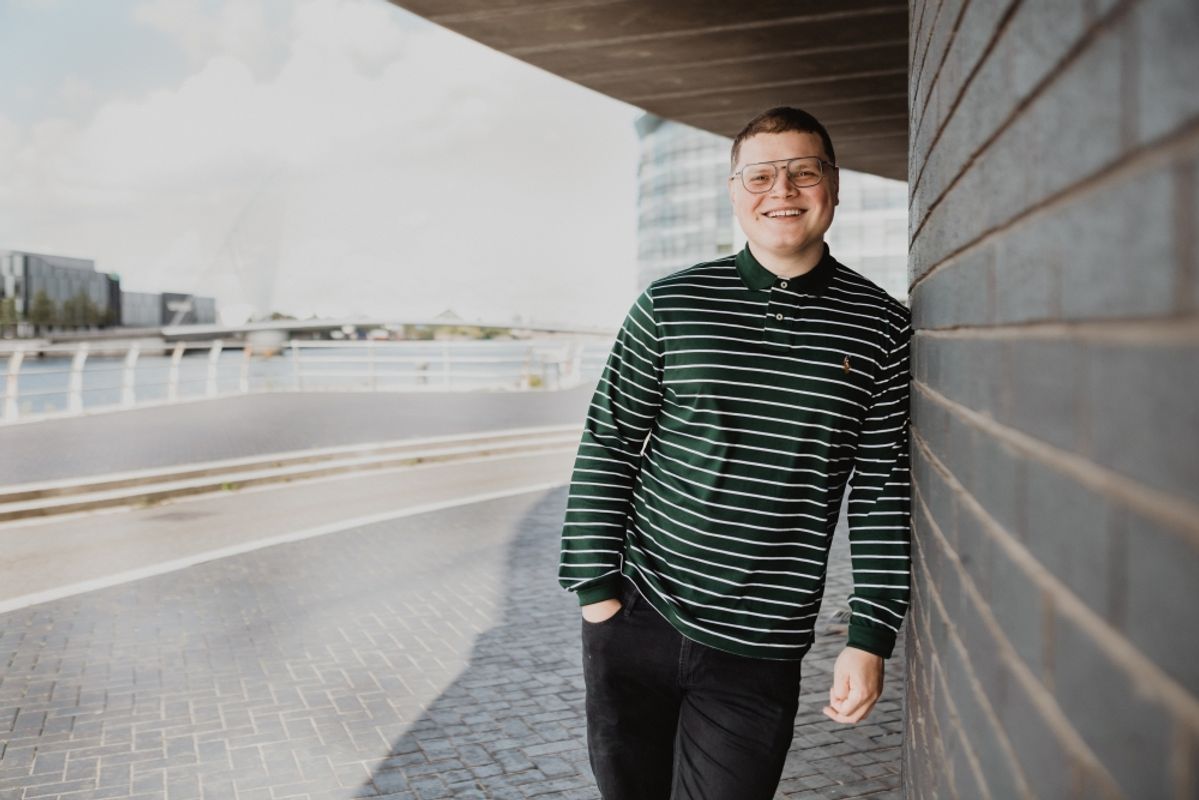
Then I joined back with Lowry as a trustee, which is incredible. I love it. I think because I’ve got that connection as a young person on the programmes, and then becoming a trustee was really an opportunity to give back the things that Lowry had given me, but also to make sure that Lowry were listening to the people that they really want to work with. Either as the young person that I once was or the young people that I now connect to, and just make sure that there are different stakeholders around the table. So joining was incredible, but it was my first trustee position. I was the only under-30 on the board. Actually, it was terrifying. It's very scary. I think you have that moment where you're like, is this a diversity hire?
But then I came in and straight away I was involved in proper work. I think all of the time that I'd done work had always been seen as a ‘young person’, so I might have been credited for doing the work, but the focus had always been on me being young, whereas when I joined Lowry that wasn't the case any longer. I had to become a trustee, like the rest of them, and that expectation was on me. And that felt really incredible.
Since I've been able to do some really cool work. We've been with the Arts Council in Parliament to talk about the work that Lowry do. We've launched our Impact Report. So we've done some really, really great stuff, but I've always been taken seriously, which is something I value a lot.
Making Culture Count was a report showing the impact that Lowry has. When people think about money, they think about the money that they give, they think about the way that it's helped people, often through the stories. Lowry were really, really clever in terms of being able to turn that into numbers. So what is that Return on Investment? And that was massive, because a lot of people in the social impact sector will talk about that. Lowry’s ROI it's incredible. So it gave us a different way to start talking about Lowry. So that impact report was really, really important for us.
In terms of marketing, we’ve done a whole rebranding. I think it's always a bit of a shock when you do new branding. But I think it places the focus on Lowry, not on the building, just on the work that goes on here. I think that's what we really needed to do.
For example, when you're running a theatre, the learning and engagement work can get lost in the middle of that. And what we really wanted to do in this next chapter was tell the story of the learning and engagement work. Because we put loads of great stuff on stage, and loads of great art and talent, but the stuff that we do in the evenings with young people, older people from the local communities, is some of the most incredible stuff going on, not just in the theatre scene, but in the whole third sector.
It sounds biased because I’m on the board, but it genuinely is next-level work, not just the numbers that we reach, but young people that you would reach, that the system would often call ‘hard to reach’. Lowry says they’re not hard to reach. We're going to get there. We’re doing stuff in Little Hulton, and we're doing stuff across Salford in areas where a lot of the services just can't get into. And Lowry are able to build those connections because they're giving young people spaces to be themselves.
I want to keep doing good work and keep working with young people, and keep the focus on Salford, so that young people can thrive. We're not just telling this wonderful story of Salford being this place that's now gentrified, and we don't have to worry anymore because poverty still exists here. It’s really important that we don't forget that. So focusing on that and making sure that young people can come up with the city - as the city rises, young people can rise there too. I think that's really important.