

Bill
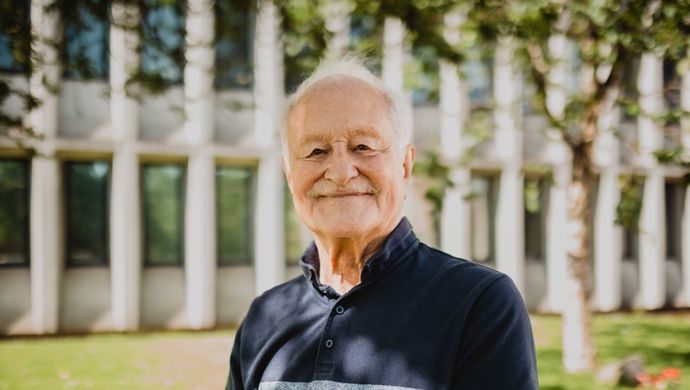
Councillor
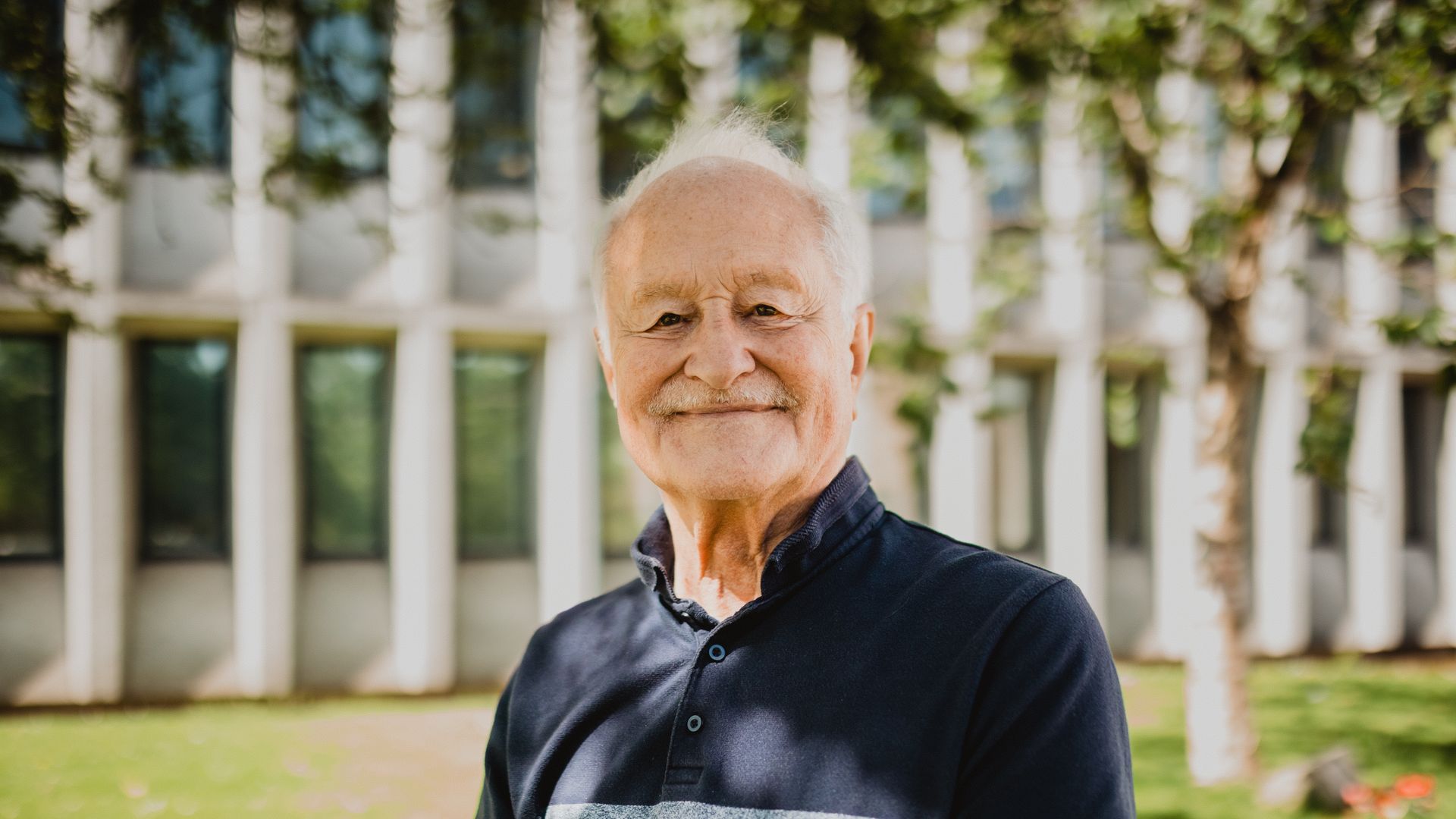
I'm an engineer by trade. I served my time at Churchill's in Broadheath. Then I came on to Salford Council in 1984. I was the leader for 15 years, lead member for finance for 20 years. And then I stepped down, moved into Skills and Work for a year. Just before I left the party, I was involved with education as a support member. So in all those 41 years, I've only ever been on the back benches for one year, all the rest have been in senior positions.
Just before I got on in the early 80s, the council bought what is now The Quays, Salford Docks at the time, and the leader at that time and the chairman of planning, they both took a risk, persuaded the then Chief Executive to spend money on buying the docks. It had declined and they got in touch with a businessman called Ted Hagan, who was involved with housing projects, and they built the hotel, which is still there on Trafford Road, and built some houses and it developed from there.
After four years on the council, I became leader. So a lot of the work had already been done in the early 80s. I think with all these efforts, on the housing front and the leisure front, there was one piece of land left, and they penciled that in for an arts complex.
This was in the early 90s. I can remember going down to the site where the Lowry is now and it was pouring down with rain. The wind was blowing like it was a gale and there was nothing there. It felt pretty bleak. They thought we were mad, the idea of developing a state-of-the-art complex for leisure, theatre, ballet, opera and communities, in this place seemed unimaginable.
We kept pushing. John Major, the then-Prime Minister, brought in the National Lottery and therefore we were able to combine the Arts Council, Heritage and Lottery funding. We then presented a case. It took about a year but we persuaded the government that this was a goer, based on economics and growth and the rest of it. Now there’s more people working on Salford Quays than there ever was in the old docks. Different jobs, but nevertheless, that's how it progressed. And I want more and more people to get into the entertainment business and the arts.
I must admit the main minister then was Michael Heseltine for the Conservatives, and he really did work hard on our behalf. He was very supportive on this. I’ve got to admit it, even though he was in a different party to me, he was really good for us in those days.
I can remember when I was leader and I used to go on the the Alan Beswick show on Radio Manchester. I was criticised as a Labour leader, ‘How can you afford to spend money on the Salford Quays when Ordsall, on the other side of Trafford Road is one of the most deprived areas in the whole city?’ I used to say, 'We had the choice whether we took government money to develop the Quays. We had the choice of not doing that, and then nothing would happen. But we didn't have the choice of saying, Oh no, we're going to want to spend it on the other side of Trafford Road. The situation was, if you want this money, it's there for a specific purpose, and that's to build this development.’
The day that we heard that the funding came in, I made a statement that it was Salford's greatest day in living memory. And I did feel that. It wasn't easy, by the way, many people, even in the Labour group on the council, thought we were going into an area that we didn't know very much about. People thought it could have been a white elephant. And of course, it hasn't. It's been really successful. Especially among young people and people trying to get into the performing arts.
I’d say people were more worried than skeptical. In the 41 years I’ve been involved, local government has always struggled. When Margaret Thatcher came in in 1979 there was two big issues that she was wanted to challenge, and that was the trade union movement and local government. The cuts have come continually, on and on and on, and there'll be more coming with the economic situation at the moment, so people have always worried about that. Especially when we embarked upon buying the old docks.
People started to think, well, have we bitten off more than we can chew here? People were worried, that going into the arts, that money could stop and where that would leave the council? But we pursued it. The then-Chief Executive, John Willis, led it from an officer's point of view. I led it from a political point of view. But many members wondered, have we gone too far? But we were determined that we would do it, and we did it.
We've had our ups and downs. But when you look at the Lowry now, you think it's been there forever. The Lowry was the catalyst, even though the Quays had been started, the real key to it all was the Lowry, because then we got the BBC, The Imperial War Museum on the other side, and the development really started taking place.
We had a groundbreaking ceremony where hundreds of school kids chose things to bury at the site, like a time capsule. That was before the official opening. They were really excited, these school kids that came down. They'll be there forever, in the sense, what these kids did. They will all have grown up now. But they can always say, I was part of that.
I always smile and say that I was on the stage with Glenda Jackson. She was a minister in the Labour government when we were building it. We often went down to the site to have a look, so I took Glenda Jackson and we got on the stage that was in the middle of being built.
Then, the Queen opened the Lowry in the year 2000. And by the way, I'm not a royalist, and I actually told the Queen that I was a Republican. That was a wallop for me!
Of all the work, and I've done loads of different works, day-to-day issues for ordinary people, but the pride for me was The Lowry. That was always based on the fact that I wanted the arts to be for ordinary people. People grow up to feel that it’s not for them, but it is. It’s for everyone. That’s was my ambition and that was my theme.
When I started out, many people said, the arts is not for the likes of us. We used to get invited to the Opera House, The Palace in Manchester, and other venues, and you were always expected in those days to wear black tie. I must admit I was uncomfortable. I just wore a lounge suit and a tie. Now, if you go to the to these venues most people go like that, they're not in black tie, dressed up to the nines. You could go in a pair of jeans if you wanted. Everyone is welcome.
I love the ballet and I love the opera. Now, when people say to me, I don't understand it, I say, you don't have to understand it! I'm no expert on ballet. You know if a ballet dancer, isn't falling over the floor and they're good, as far as I'm concerned, they're good.
I always say to people, read what it's about, get the story. The rest falls in place once you know the story. Opera, now it's all with English subtitles, so you know what they're singing. The rest will fall in place. You'll get the beautiful music in the ballet. You'll get great songs in the in the opera, and you'll enjoy it. So it's nothing to be frightened of. It doesn't mean you're going to love it, but you will be in a far better place to understand it. Don't ever be frightened.
We're working on that, and certainly working with young kids. Julia Fawcett and her team at the Lowry are really, really working on that. They do a really good job. I think they're brilliant, no doubt about it.
For the next 25 years? I hope that The Lowry keeps developing and developing for everybody's benefit; for the enjoyment, so that people are engaged in it. And hopefully, ordinary people will be going to the pub and saying, I went to see Hamlet the other night and have a discussion on that. That's the aim, for me.
I've seen so many things over the last 25 years. Everybody works extremely hard, to make a good performance. We have so many volunteers, going in there, helping out. Now they wouldn't do that if they didn't think that what the Lowry does is important.
We didn't go into this for a year or five years or 10 years. We've gone in for 25, 30, even a hundred years. And time has flown, which shows that we have been right in that sense. There was an old saying many, many years ago, that what London does tomorrow, Manchester does today. And I always added to that by saying, And Salford did it yesterday! Because we've always been in the forefront, and I think Salford should be proud of that.