


Carlos Acosta on Reviving Don Quixote: ‘It’s Pure Joy on Stage’
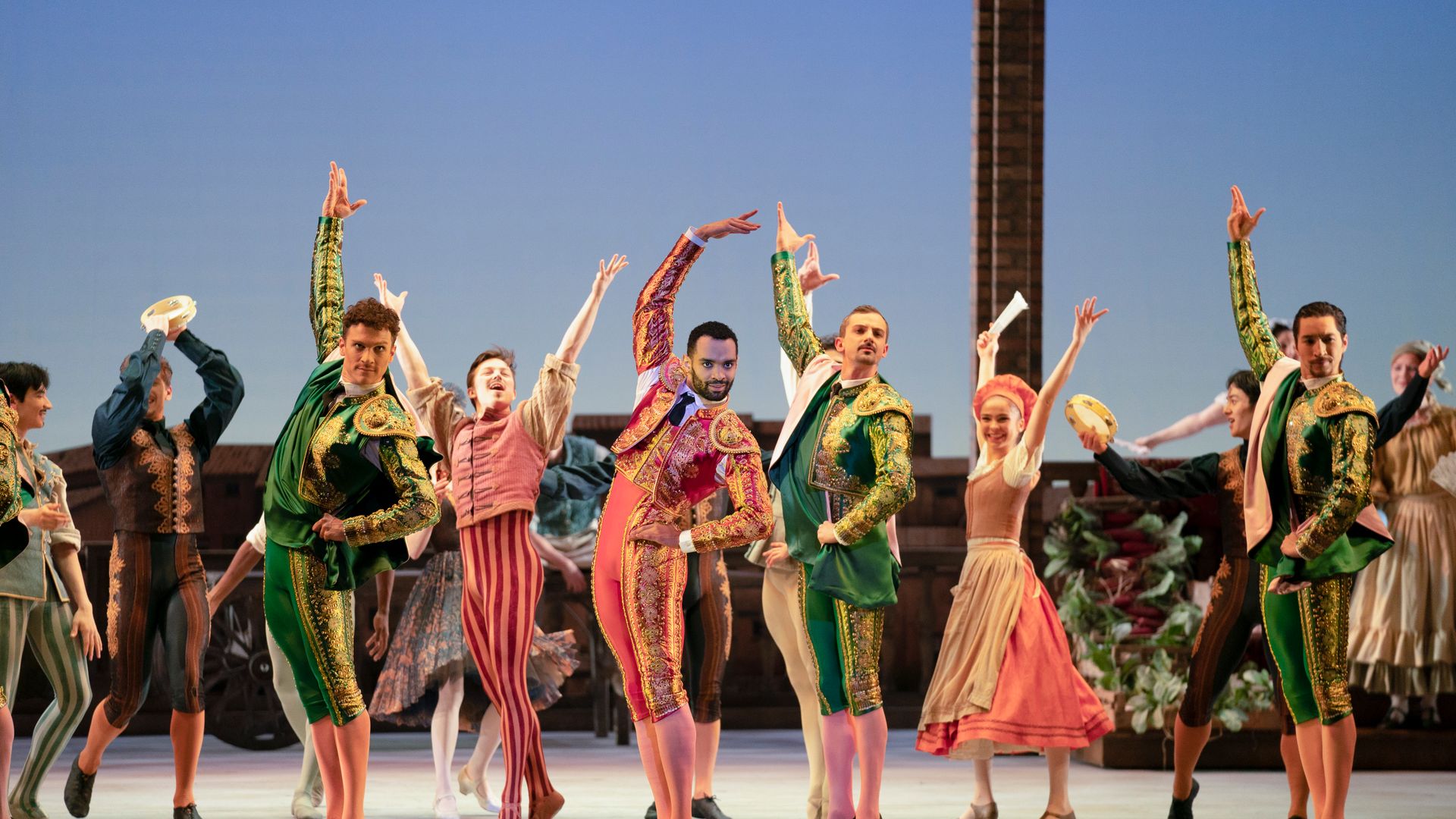
Birmingham Royal Ballet’s sunshine‑filled spectacular Don Quixote, created by Carlos Acosta, arrives at The Lowry, Salford from Thursday 5th to Saturday 7th March. Bursting with colour, comedy and breathtaking dance, this feel‑good production promises the perfect escape from the winter blues. Tickets are onsale from thelowry.com
It may be wet and windy outside but Birmingham Royal Ballet promises to bring a bit of sunshine with its stage spectacular Don Quixote.
Choreographed by BRB director Carlos Acosta after the original 19th century production by Marius Petipa, the show is based on Miguel Cervantes’ classic novel which tells of the adventures of the hapless knight Don Quixote and his squire Sancho Panza.
Set in Spain, it is a glorious comedic romp filled with colourful characters and technically complex dancing.
“Winter is the perfect time for Don Quixote,” says Carlos. “You go and see Don Quixote and you see the sun - it’s happy, it’s colourful, it’s funny, it’s a parody and it makes you laugh.
“You have this wonderful funny quirky duo in Don Quixote and Sancho Panza but then you also have so many other characters – gypsies, fishermen, dryads and all different kinds of dance.
“It is unusual in ballet because it has a happy ending, nobody dies at the end of the ballet like normal ballet tragedies. And it’s great for family, if you want to bring your kids, this is the ballet to go and watch.”
Carlos, who was a principal with the Royal Ballet, danced Don Quixote many times and created a version for the Royal Ballet in 2013 and so, when he took over as director at BRB in 2020, he was determined to create a new stage version.
With beautiful sets and costumes by Tim Hatley and video projection by Nina Dunn, the show premiered at Birmingham Hippodrome in 2022 before touring and was a huge hit with audiences and critics.
For Carlos, new work is part of the evolution of Birmingham Royal Ballet. In the past five years since taking the helm he has overseen the premieres of a host of new productions including the sell-out Black Sabbath – The Ballet, Luna, City of a Thousand Trades and Lazuli Sky.
“My aim is to bring new work to the company,” Carlos says. “It keeps people engaged and gives the dancers opportunities to perform works they otherwise wouldn’t have the chance to dance.
“Even with the classics like Don Quixote, I am always thinking outside the box, always trying to bridge the gap between the 19th century and today.
“We should be able to do more when we are creating a work, so I’m bringing projections or I’m delivering it in a completely different way with aesthetics so that it feels like we are doing it now instead of just a reproduction of Petipa.”
Don Quixote may be joyous to watch but, says Carlos, it is technically a very difficult ballet to perfect. And its challenge is part of the reason he was keen to introduce it to the company.
“The dancing is very hard in Don Quixote,” he explains. “It pushes the dancers and that helps them to improve.
“To me, what I am putting on stage is sacred and it is clear to everyone in the company by the way that I cast that I am pushing for excellence. I pushed and I worked so hard myself as a dancer and it’s the only way I know to get you there. I try to transfer that into the dancers.”
Carlos is eager for the BRB dancers to reach the highest levels of performance.
“It's important to recognise that being a professional dancer means being consumed by what you do. It’s a lifestyle, it’s not something that you do occasionally.
“Maybe it’s not for everybody because it’s a very stressful environment, it’s the touring, the loneliness, the injuries. But it’s always going to be a battle of the mind over the body.
“By breathing it, by living it - that is the only way towards improvement. And for those who are willing to put up with the work and show results, I will be there to promote them. And there is a lot of great talent coming up through the company.”
Among that talent is principal Beatrice Parma who won the Outstanding Female Classic Performance at the National Dance Awards in June for her role as Lise in La Fille mal gardée and also won Dance Europe's Dancer of the Year Award 2025.
“Beatrice is a very versatile ballerina,” Carlos says. “In Fille she is pure Ashton with great technical ability and then in Luna, that is very hard contemporary language so to have a ballerina who mastered those two spectrums of dance is incredible and people took notice of that.
“It is great to see how some people just rise to the challenge and she is a ballerina that doesn’t rest. She wants more, she is 100 per cent committed and if you have that attitude you see the results.”
Carlos has also received accolades in the past year being awarded an honorary degree by University of Birmingham in July and winning the UK Theatre Award for Outstanding Contribution to British Theatre in October.
“The theatre award was amazing and unexpected,” he says. “It was for the productions I’ve put on, all the things I am programming. It was fantastic not just for me but also for the ballet sector to be recognised in the world of theatre.”
Looking ahead, Carlos hopes to continue to develop the company, encourage improvements in its dancers, expand its touring and create or commission new work for audiences.
“If you ask me, I want more, I want everything for this company - but only one step at a time,” he says.
“I think so far I’m very happy that I have contributed in a big way to this company’s history by taking them to places where the company had never been – Luxembourg, the Pyramid Stage at Glastonbury or the Kennedy Center in Washington. And then in the future I’m also looking for other opportunities to travel to other places and give them the experience of what it is to dance in some of these places.
“And I am proud of works like Black Sabbath and Don Quixote. I would say to people who don’t know Don Quixote to give it a chance because it’s packed with all the ingredients of a popular show. It’s a show which is going to give the audience a great feeling and great escapism.”
By Diane Parkes